

Commercial kitchens don’t fail because of cooking quality. They fail because energy systems are ignored during planning. Exhaust systems get overloaded, refrigeration works inefficiently, heat zones overlap, and workflow becomes chaotic. The result is simple. Energy costs keep rising every single day, silently eating into margins.
A Kitchen Consultant ensures these problems are controlled at the design stage itself, not after operations begin.
This is where hospitality consulting becomes critical. It connects kitchen design with real operational performance and energy efficiency standards that actually work in high-pressure environments.
Energy Efficiency Standards in Commercial Kitchen Design
A Kitchen Consultant treats energy efficiency as a core design requirement, not an optional upgrade.
Most commercial kitchens lose energy through avoidable design mistakes. Oversized cooking equipment pulls more power than needed. Poor ventilation balance forces exhaust systems to work harder. Refrigeration placed near heat zones increases load. Even small design errors compound into high monthly costs.
A proper hospitality consulting approach ensures that layout, airflow direction, heat zoning, and equipment selection follow defined energy efficiency standards. This reduces waste before the kitchen even becomes operational.
When design is done correctly, energy efficiency is not forced later. It naturally becomes part of the system.
Role of a Kitchen Consultant in Energy Optimization
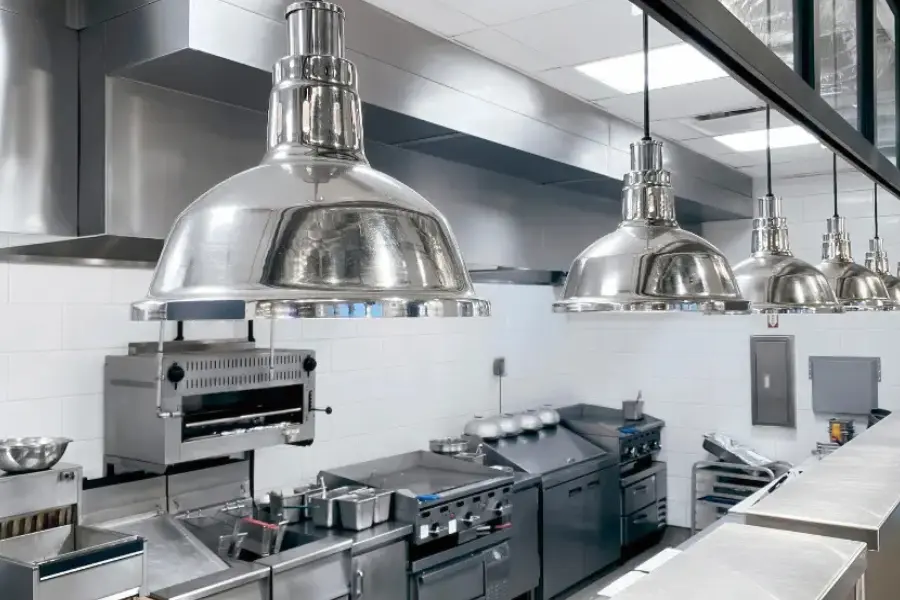
A Kitchen Consultant doesn’t just place equipment on a layout. The focus is on how energy moves across the entire kitchen system.
Energy efficiency depends on multiple factors working together. Cooking load, ventilation pull, refrigeration cycling, and staff movement all influence consumption. If one part is misaligned, the system compensates by consuming more energy elsewhere.
This is where hospitality consulting becomes performance-driven. It studies real kitchen behaviour, not just theoretical design. The goal is to make sure the kitchen performs efficiently under peak load, not only during planning stages.
Without this layer, kitchens often look efficient on paper but fail in real operation.
Designing Energy Efficient Kitchens from the Start
A Kitchen Consultant builds energy logic into the kitchen before any equipment is finalized.
This starts with zoning. Cooking zones must be grouped correctly to avoid heat spread. Cold storage should be isolated from high-temperature areas. Dishwashing sections must be placed to reduce unnecessary movement. Exhaust systems need direct alignment with heat-generating equipment.
If these elements are not planned early, the kitchen continuously wastes energy every day it operates.
Early-stage hospitality consulting ensures energy efficiency is not treated as a correction later but as a design principle from the beginning. This is what separates high-performing kitchens from expensive-to-run ones.
Commercial Kitchen Planning for Real Operational Load

A Kitchen Consultant ensures energy standards match real kitchen operations, not ideal conditions.
Commercial kitchens rarely operate in controlled environments. Peak hours create overlapping tasks, simultaneous cooking, and continuous equipment usage. This leads to sudden spikes in energy demand.
Without structured planning, systems become overloaded. Equipment runs longer than necessary. Airflow gets disrupted. Cooling systems compensate for heat buildup.
Structured commercial kitchen planning ensures workflow design, equipment capacity, and utility distribution are aligned with real usage patterns. This keeps energy consumption stable even during high-pressure operations.
Good planning reduces stress on systems. Poor planning increases operational cost forever.
Conclusion
A Kitchen Consultant defines how efficiently a commercial kitchen performs every day. Energy efficiency is not something added later or corrected after problems appear. It is built into the system from the beginning through planning, design, and operational alignment.
Strong hospitality consulting ensures kitchens are cost-efficient, compliant, and designed for real operational pressure, not just theoretical performance.
When energy standards are built into the foundation, the kitchen performs consistently, efficiently, and profitably over time.