
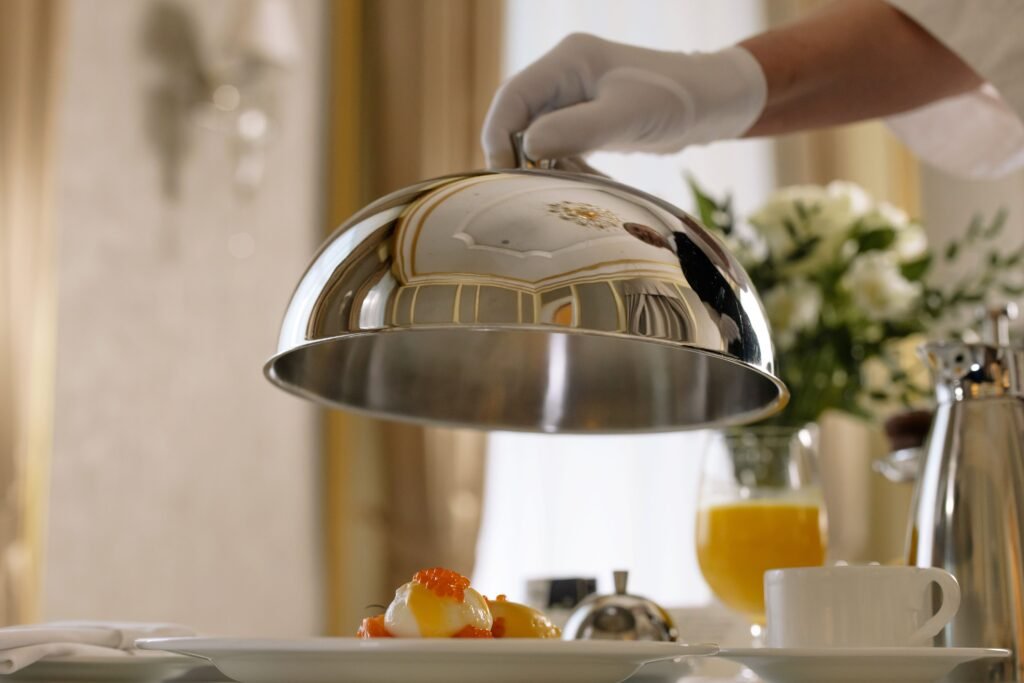
The moment a dish arrives at a hotel restaurant table and lands well – the right temperature, the right presentation, delivered without a wait that broke the mood – feels spontaneous. It feels like hospitality.
It is not spontaneous. It is the end result of a sequence of decisions that were made long before the guest sat down: decisions about what the outlet should be, how the menu should be structured, what the kitchen needs to execute it consistently, and how service should flow to deliver it without friction. Each of those decisions shapes what the guest ultimately experiences, and each of them is either made deliberately or made by default.
A food and beverage consultant makes them deliberately – from the first conversation about what an outlet should be to the last detail of how it should run at full cover. That is what the journey from concept to cover actually involves, and what gets lost when it is treated as a series of separate decisions rather than one connected process.
Stage One: Defining the Concept Before Anything Else Is Decided
The F&B concept is the decision that every other decision in a hotel dining programme depends on. It determines the guest the outlet is designed for, the experience it is trying to create, the price point it needs to sustain, and the kitchen scale it requires to deliver.
Concepts that are defined loosely – a ‘casual dining option’ or an ‘all-day dining space’ – produce kitchens, menus, and service models that are trying to serve multiple purposes without excelling at any of them. A concept that is defined precisely – the market it serves, the occasion it is designed for, the experience it wants to be remembered as – gives every subsequent decision a clear standard to be tested against.
A food and beverage consultant works through this definition before the kitchen is specified, before the menu is drafted, and before the interior designer is briefed – because the concept is the brief that all of those follow, not the conclusion they produce.
Stage Two: Building a Menu That the Kitchen Can Actually Deliver
A menu that has been designed without reference to the kitchen that will produce it is a menu that will be modified, shortened, or quietly abandoned within the first operating season. The dishes that looked perfect in a tasting room reveal their limitations during peak service: they take too long, they require equipment the kitchen does not have, they depend on ingredients that cannot be consistently sourced at the volume the outlet needs.
Building a menu alongside the kitchen rather than before it means every dish is tested against the physical and operational constraints of the space that will produce it. Cooking methods are matched to available equipment. Prep volumes are calibrated against storage and refrigeration capacity. The range of dishes is sized against the brigade that will execute it across a full service week rather than a single tasting session.
The result is a menu that holds its standard in week forty of operation as well as week one, because it was designed for the kitchen it actually has rather than the kitchen the concept originally imagined.
Stage Three: Designing the Kitchen Around the Service Promise
A kitchen that was not designed around the service promise of its outlet will always compromise it. The service pace of a sixty-cover casual dining outlet, the throughput requirements of a breakfast buffet, and the precision demands of a fine dining restaurant all require fundamentally different kitchen configurations – different station layouts, different equipment specifications, different spatial relationships between prep, cooking, and plating.
When the kitchen is designed after the concept and menu are fixed, it can be configured to match them. When it is designed before them – or alongside an architectural process that was not informed by the F&B brief – it becomes a constraint that the menu has to work around for the life of the outlet.
This sequencing is one of the most consistently consequential contributions that hospitality consulting makes to a hotel F&B programme. Concept first, menu alongside, kitchen configured to match both – that sequence is what gives a dining outlet the infrastructure to deliver on its promise at every cover it takes.
Stage Four: Service Execution as the Final Test of Every Prior Decision
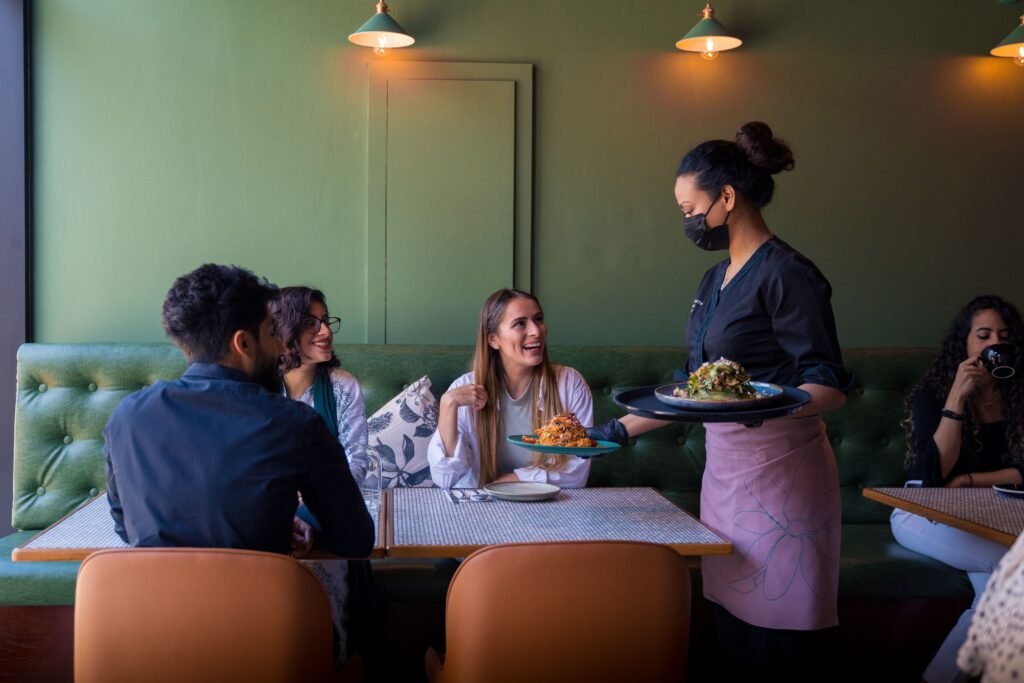
The cover is where every decision made from concept onward is tested simultaneously. A weak concept produces a dining room that feels directionless to guests who cannot quite identify what the outlet is for. A menu that was not built for the kitchen produces delays and inconsistency that guests register as poor service even when the service team itself is performing well. A kitchen that was not designed for the outlet produces constraints that staff learn to compensate for, at a cost to the experience that accumulates invisibly across every service.
The inverse is equally true. A well-defined concept, a menu calibrated to the kitchen, and a kitchen configured for the service model produce a dining outlet where service feels composed rather than managed – where the experience the guest receives matches the experience the concept intended, not a simplified version of it.
That alignment does not happen by coordination alone. It is built into the outlet at the planning stage, which is precisely why the journey from concept to cover is one connected process rather than four separate ones.
Conclusion
Guest experience in a hotel dining outlet is not created at the table. It is created at the planning table, in the decisions about what the outlet should be, what it should serve, how the kitchen should produce it, and how service should deliver it – decisions that need to be made as a sequence, not a set of independent choices.
A food and beverage consultant holds that sequence together from concept to cover – ensuring that each stage builds on the one before it rather than working around it. That is what hospitality consulting produces when it is applied to F&B at the right stage: not just a better menu or a better kitchen, but a dining outlet that actually delivers the experience it was designed to create, at every cover, every service, every day it is open.