
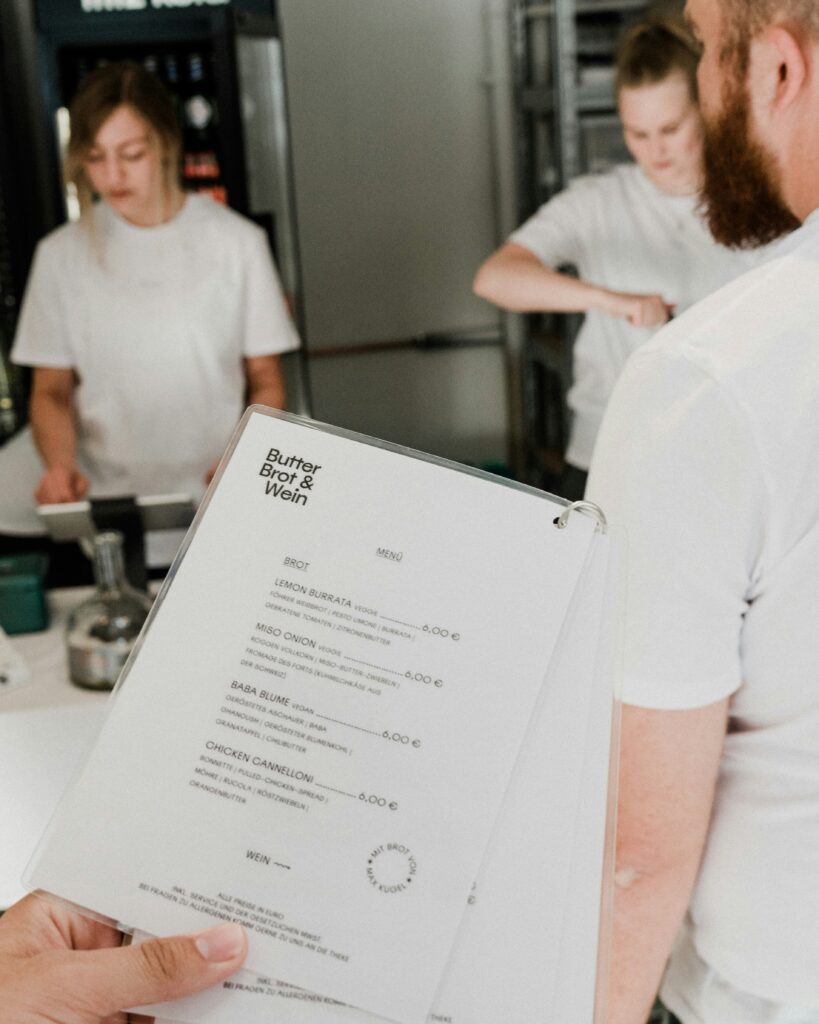
A menu is usually treated as a creative decision. Kitchen design is usually treated as a technical one. In most hotels and restaurants, the two get planned by different people, at different times, with almost no conversation between them.
That separation looks harmless on paper. In real operations, it’s where service slows down, food cost creeps up, and dishes that looked perfect in a tasting session quietly disappear from the menu six months later.
A food and beverage consultant exists precisely to close that gap, treating menu and kitchen as one decision instead of two. It’s a principle that sits at the heart of good hospitality consulting: nothing in a kitchen exists in isolation.
Why a Beautiful Menu Can Still Break a Kitchen
Menus are usually designed around flavor, food cost percentage, and guest appeal. All of that matters, but none of it accounts for what happens when fifty orders for the same dish hit the kitchen at once.
A dish that needs four different stations to plate will always be slower than one built around a single workflow, no matter how well the recipe is written. A menu with too many proteins, too many cooking methods, or too many specialty ingredients can quietly overload a kitchen that was never designed to support that range.
This is where a food and beverage consultant steps in early, testing whether a menu’s ambition matches the kitchen’s actual capacity, before guests start noticing the gap.
Designing the Kitchen Around the Menu, Not the Other Way Around
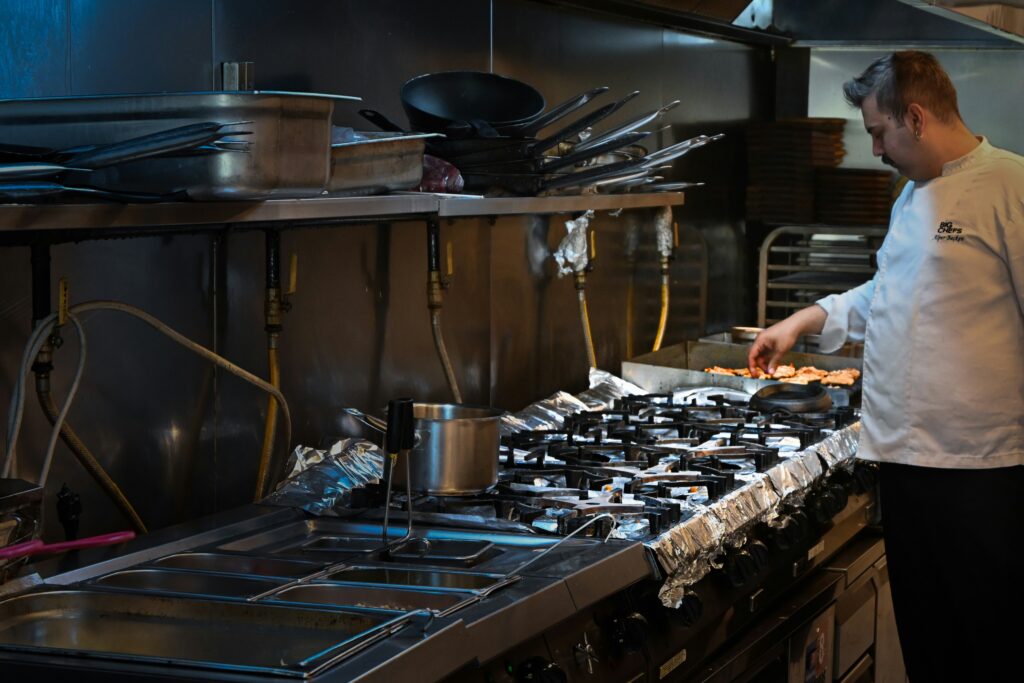
Most kitchens are built first, with the menu fitted into whatever equipment and layout already exist. The smarter sequence works the other way around.
When the menu comes first, equipment choices, station placement, and even ventilation requirements can be planned around exactly what the kitchen needs to produce, not guessed at in advance.
A grill-heavy menu needs a different layout than a sauce-driven one. A bakery program needs proofing and storage space a typical hot line never accounts for. Designing backward from the menu means the kitchen earns every square foot it has, instead of working around space that was never meant for it.
The Profitability Question Hiding Inside Every Dish
Menu engineering is often reduced to food cost percentage, but the real profitability of a dish depends just as much on how long it takes to prepare and how many hands it passes through.
A dish with thin margins but a fast, single-station workflow can outperform a higher-margin dish that ties up three cooks during peak service. Without visibility into kitchen workflow, that math stays invisible to whoever is engineering the menu.
This is the kind of cross-functional thinking strong hospitality consulting brings to the table: connecting culinary decisions to operational reality, so profitability isn’t just calculated on paper but actually shows up at the end of service.
Consistency Across Every Shift, Not Just the Opening Week
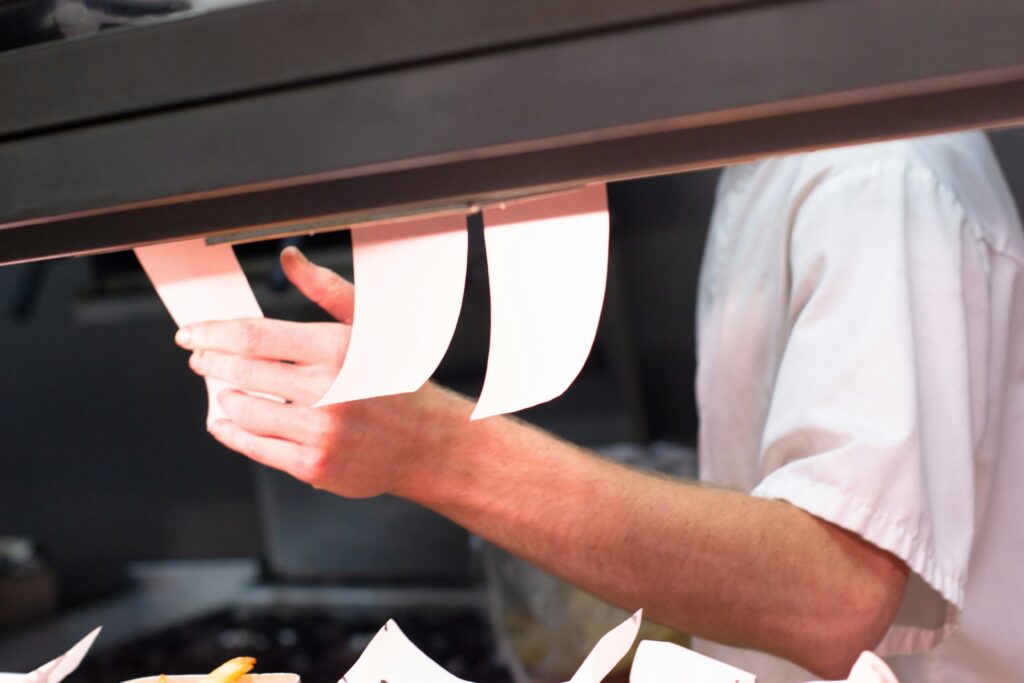
A new menu can look flawless during a calm tasting session and fall apart entirely during a packed Saturday night. The difference usually isn’t the recipe. It’s whether the kitchen was designed to execute that recipe consistently, shift after shift, cook after cook.
A food and beverage consultant builds menus that hold up under real pressure, not just under ideal conditions, by designing portion controls, prep schedules, and station layouts that any trained cook can follow, not just the chef who created the dish.
Conclusion
Menu engineering and kitchen design were never meant to be separate conversations. Every dish on a menu is also a set of instructions for a kitchen to execute, and every kitchen layout is a quiet limit on what that menu can actually deliver.
Bringing in a food and beverage consultant early means these two decisions get made together, not patched together after the fact. That’s the difference good hospitality consulting makes: a menu that doesn’t just read well, but runs well, every single service.