
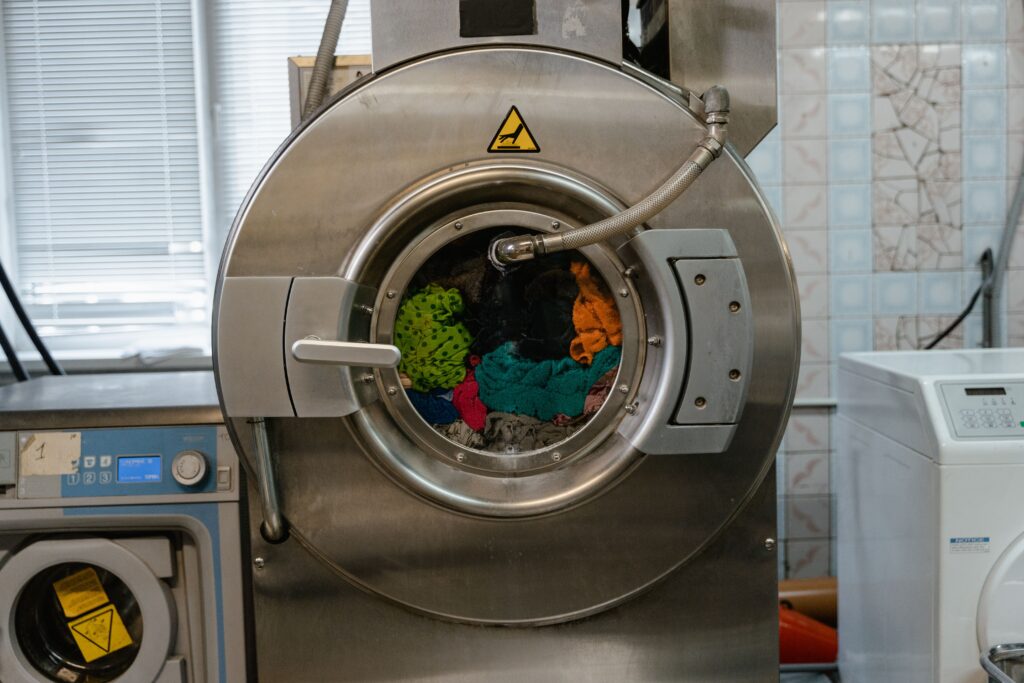
A hotel laundry room that isn’t working properly doesn’t announce itself. It doesn’t send an alert or generate a report. It simply starts costing money in three very quiet ways: linen that wears out faster than it should, rooms that take longer to turn than they need to, and machines that break down at the worst possible moment.
None of these feel like a design problem in the moment. They feel like a staffing problem, a maintenance problem, or a supplier problem. But trace most of them back far enough and the same root cause appears: a laundry room that was laid out without a plan built around how it actually needs to function.
That’s the conversation Laundry Designs and Planning exists to have, early enough that the layout can still be shaped rather than inherited.
Linen Damage: The Cost That Compounds Quietly Every Week
Linen replacement is a recurring cost in every hotel. What varies between properties is how fast that linen needs replacing, and a poorly designed laundry room accelerates the cycle in ways that are almost invisible until the numbers are added up.
When soiled and clean linen share the same handling path, contamination risks increase and rewashing becomes routine. When machines are overloaded because there isn’t enough sorting space before the wash cycle, fabric breaks down faster. When drying and folding areas are cramped, linen gets pulled, stretched, and creased in ways that compound into early deterioration.
None of this is dramatic. It’s a pillowcase that thins out three months too soon. A towel that loses its feel before it should. A set of sheets that never quite look crisp after the third wash. Over a full year across a hundred rooms, that quiet deterioration adds up to a linen replacement budget that keeps growing without anyone knowing exactly why.
Delays: How a Poor Layout Slows Down Every Room on the Floor

Room turnaround speed depends on clean linen being available when housekeeping needs it. When the laundry room layout creates bottlenecks, that availability becomes unpredictable, and the whole floor starts working around a problem it didn’t create.
Bottlenecks in laundry rooms follow a predictable pattern. Machines positioned without thought to the flow between washing, drying, and folding create queues at each stage. Storage that isn’t adjacent to the finishing area means finished linen gets stacked wherever there’s space, not where it’s needed. Staff spend time moving things that should never have needed moving.
Good Laundry Designs and Planning maps the entire linen journey from soiled intake to clean dispatch and designs the room so that journey moves in one direction, without doubling back, without crossing paths, and without creating the pinch points that force staff to improvise every single shift.
Downtime: When Poor Planning Turns a Broken Machine Into a Crisis
Equipment failure is a reality in any laundry operation. What determines whether a breakdown is a manageable inconvenience or a property-wide crisis is whether the room was planned with enough capacity and flexibility to absorb it.
A laundry room running at one hundred percent capacity on a full occupancy day has no buffer. One machine going offline means the entire output drops immediately. Rooms back up. Housekeeping falls behind. Guests notice, not because they saw the laundry room, but because their room wasn’t ready when it was supposed to be.
Beyond machine failure, poorly planned utility connections, ventilation that can’t handle the moisture load, and drainage that wasn’t sized for real output all create their own maintenance cycles. Each one is avoidable. Each one is far cheaper to design out than to fix after the fact.
What a Well-Planned Laundry Room Actually Looks Like in Practice
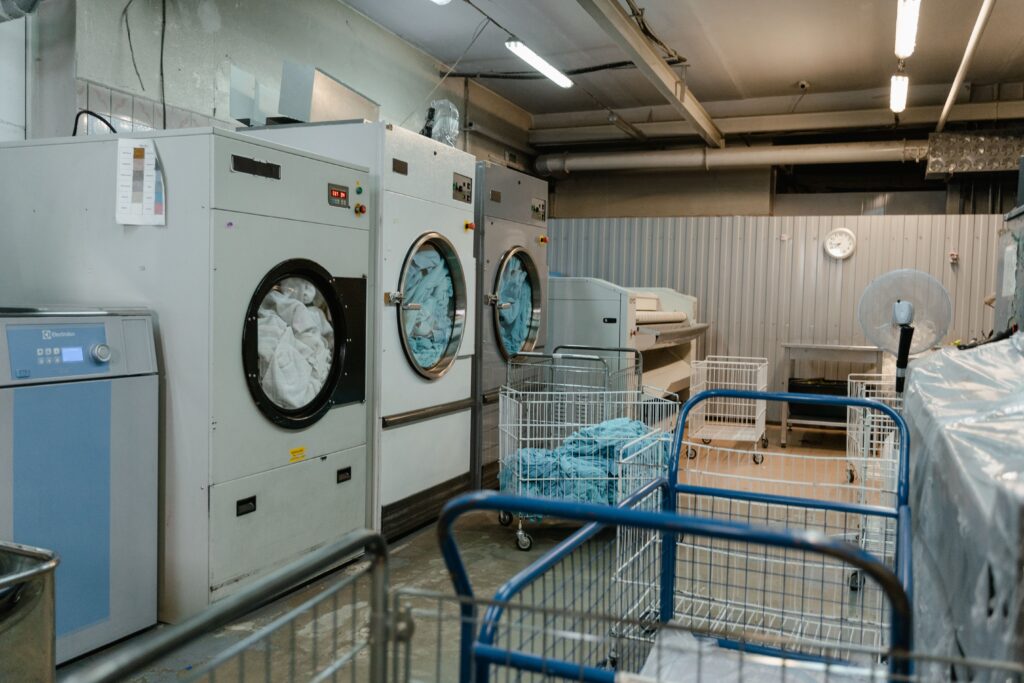
A laundry room that works isn’t complicated. It has a clearly defined path that soiled linen follows from intake to clean storage, without ever crossing the clean side of the operation. Machines are positioned in a sequence that matches the order of the work. Drying and folding areas are sized in proportion to washing capacity so no stage becomes a waiting room for the one before it.
Utility connections, ventilation, and drainage are sized for peak load, not average load, because a laundry room running at peak is exactly when a failure costs the most. Storage is placed where finished linen can be dispatched directly to housekeeping without a detour.
These aren’t complicated principles. But they require Laundry Designs and Planning that treats the room as an operational system from the start, not a collection of machines arranged in whatever space was left over once the rest of the hotel was designed.
Conclusion
Linen damage, room delays, and equipment downtime are three separate problems on the surface. Underneath, they often share the same cause: a laundry layout that was never properly planned for the operation it was asked to support.
The real cost of poor Laundry Designs and Planning isn’t visible on any single day. It accumulates across hundreds of shifts, thousands of wash cycles, and a linen budget that keeps climbing without anyone identifying the room at the centre of it. Getting the layout right from the start is simply the least expensive way to run a hotel laundry, and the most reliable way to keep everything else running around it.