
Every hotel measures room turnover. Very few trace the slowdowns back to their actual source.
When a room is not ready on time, the assumption is almost always that housekeeping is behind. More staff get scheduled, targets get tightened, and the pressure moves to the floor team. But if the floor team is waiting for clean linen that is not ready, more housekeepers does not solve anything. The constraint was never in the room. It was in the laundry room that feeds it.
Room turnover speed and Laundry Designs and Planning are directly connected, and understanding that connection is what separates hotels that solve turnover problems from ones that manage them indefinitely.

Clean Linen Availability Is the Starting Point for Every Room
A housekeeping attendant cannot complete a room without clean linen. That sounds obvious, but the full operational implication is less commonly acted on: the moment clean linen is delayed, every room waiting for that linen is delayed too. The delay multiplies across a floor, then a wing, then a property, and what started as a laundry timing issue becomes a check-in queue.
Linen availability depends on the full cycle – soiled collection, wash, dry, fold, and dispatch back to the floor – completing within the window the housekeeping schedule requires. If any stage in that cycle slows down or backs up, the linen does not arrive on time, and the room does not turn on time.
This is a system problem, not a people problem. The system is the laundry room, and how it was designed determines whether that cycle runs to schedule or consistently falls short.
How Layout Directly Controls the Speed of the Linen Cycle
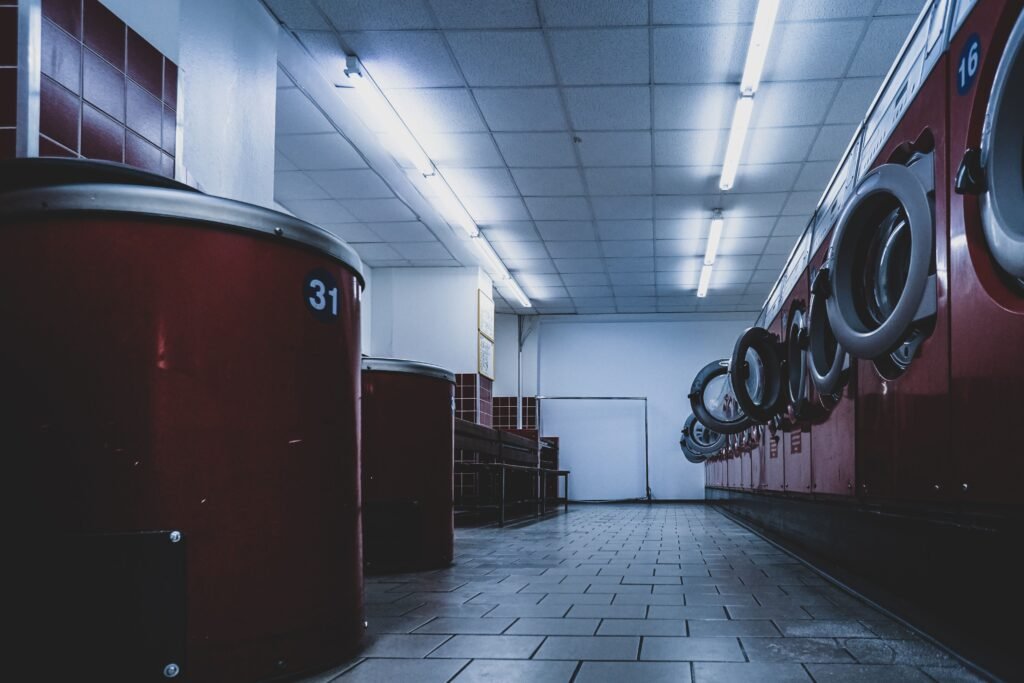
A laundry room layout that was not designed around throughput will always produce throughput problems. Machines positioned without thought to the sequence of operations create bottlenecks at every handoff point. A dryer that cannot be unloaded directly into a folding area means finished linen sits and waits. A dispatch area that is not adjacent to where clean linen is collected adds movement time to every single batch.
Good Laundry Designs and Planning treats the linen cycle as a production line and designs the room so that each stage flows directly into the next without pause, detour, or congestion. That single design principle, applied consistently, reduces the time between soiled linen entering the room and clean linen leaving it, and that reduction is what gives housekeeping back the time it needs to turn rooms faster.
Capacity That Matches Occupancy, Not Just Average Demand
A laundry room sized for average occupancy will fail on the days that matter most. High occupancy weekends, public holidays, peak season check-out mornings – these are precisely the moments when room turnover speed is under the most pressure, and precisely when an undersized laundry operation is least able to keep pace.
Capacity planning in a hotel laundry is not simply a matter of machine count. It involves understanding the peak linen volume the property generates, the time window within which that volume must be processed, and the staff required to run the room at that output level without creating a different bottleneck in the process.
A laundry room that was sized for the property at its busiest, not at its average, is one that can maintain room turnover speed when the hotel needs it most rather than slowing precisely at the point when speed matters most.
Connecting Laundry Output Directly to the Housekeeping Schedule

The laundry room and the housekeeping schedule are two halves of the same operational system, but they are rarely planned together. Housekeeping targets are set based on room count and check-out times. Laundry scheduling is set based on machine capacity and staff shifts. When the two are out of sync, clean linen and housekeeping teams arrive on the floor at different times, and turnover slows regardless of how efficiently either department is running individually.
Aligning the two requires understanding the precise linen volumes each room type generates, the sequence in which soiled linen arrives from the floor, and the output rate the laundry room can sustain under real operating conditions. With that data, the laundry schedule can be built to deliver clean linen to the floor in the sequence and at the times that housekeeping actually needs it.
That alignment does not happen automatically. It is the result of planning both departments as a connected system from the start, rather than optimising each one independently and hoping the handoff works.
Conclusion
Room turnover speed is not just a housekeeping metric. It is a laundry metric in disguise, measured on the floor but determined well before housekeeping ever arrives at the door.
Hotels that consistently turn rooms faster have usually solved the same problem at the same point: they planned the laundry room to support the pace the operation requires. Strong Laundry Designs and Planning builds that connection between linen output and housekeeping schedule into the physical design of the space, so that the floor team has exactly what it needs, at exactly the right time, without the workarounds that quietly cost a hotel the speed it is trying to maintain.