
Nobody checks into a hotel for the laundry. Yet few things tell a guest more quickly whether a hotel keeps its promises than the sheet they pull back at night.
The weight of a towel. The crispness of a pillowcase. The brightness of white that is actually white. Guests may never see the laundry room, but they feel its work every single day of their stay.
That is why linen quality is not a housekeeping issue. It is a design issue, and it is decided long before the first wash. Thoughtful laundry design and planning is what protects both the linen a hotel has paid for and the brand standard it has promised.

Linen Is an Asset, Not a Consumable
Hotels invest heavily in linen. Sheets, towels, duvet covers, banquet cloths, and uniforms add up to one of the larger recurring purchases in the operation. And yet linen is often treated like a consumable: bought, used, replaced, and forgotten.
Here is the less obvious truth. A great deal of linen damage does not happen in the guest room. It happens in the laundry. Every wash cycle, temperature, chemical dose, drying cycle, and fold adds to the life of the fabric, or quietly subtracts from it.
Which means the laundry is not just where linen is cleaned. It is where linen life is decided.
Think of it this way. A hotel can choose the finest cotton on the market, but if the laundry cannot wash, dry, and finish it properly, guests will experience ordinary linen at a premium price.
Where Quality Is Won or Lost Inside the Laundry
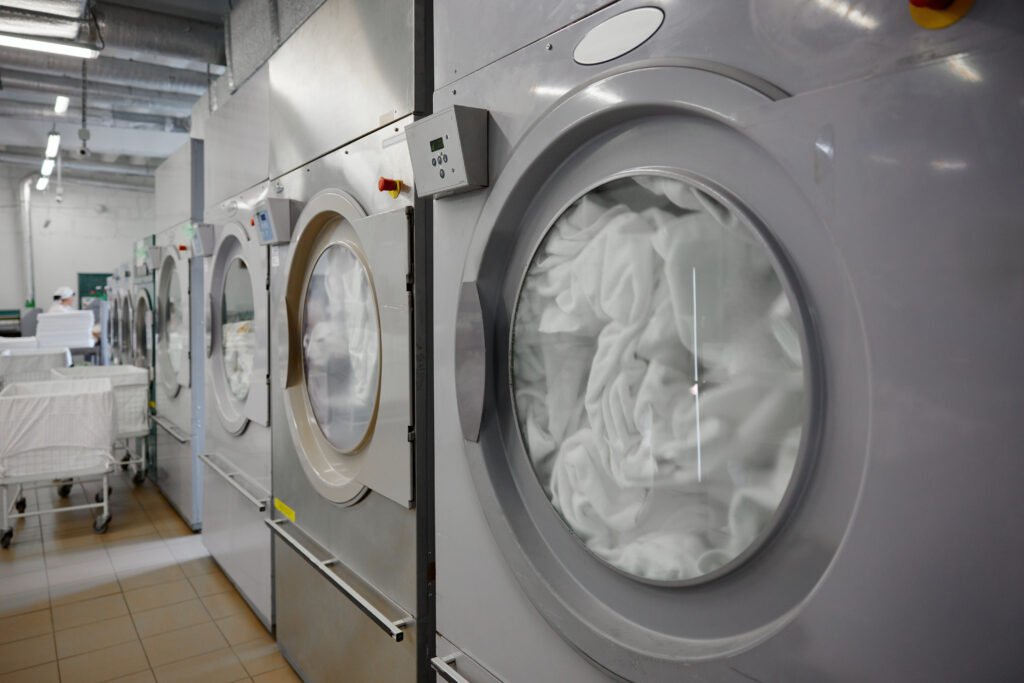
Right machines, right loads. Equipment that is too small for the volume gets overloaded, which means poor cleaning and extra mechanical wear. Equipment that is oversized for the workload wastes water and energy. Capacity needs to be matched to real linen volumes, including peak days.
Water, chemistry and temperature. Water hardness affects whiteness and softness. Wash temperature and chemical dosing decide how clean linen gets and how fast fibres break down. These depend on utilities that have to be planned into the building, not added later.
Drying and finishing. Over-drying stiffens and weakens fabric, while under-capacity finishing creates a backlog that pushes staff to rush. How space, steam, and workflow come together here is something we explored in Why steam, space, and sequence decide a laundry’s fate.
Soiled and clean kept apart. A one-way flow, from soiled intake through washing to clean storage, prevents cross-contamination and protects hygiene standards that guests rightly expect.
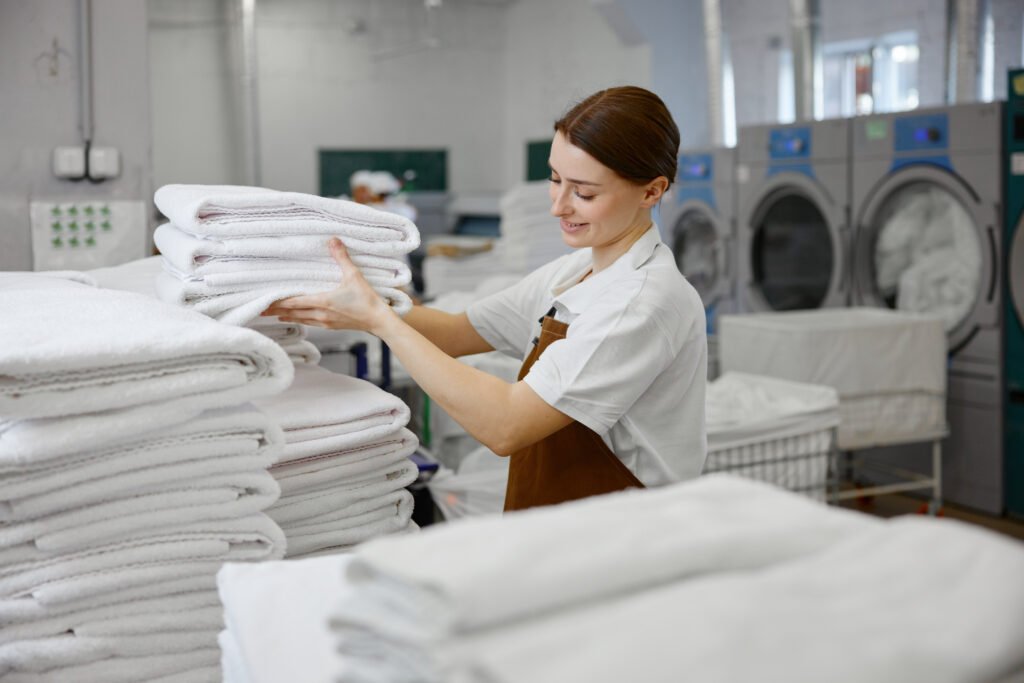
Gentle handling. Trolley routes, chutes, sorting areas and storage affect how linen is carried, stacked and stored. Creases, stains and tears often start with how linen moves, not how it is washed.
From Brand Manual to Back of House
Every hotel brand has standards for linen: how it looks, how it feels, how it is folded, and how clean it must be. Audits check the result. The laundry produces it.
When the laundry cannot deliver consistently, standards slip quietly. Whites turn dull. Towels are retired early. Rooms are delayed because clean linen is not ready. And to compensate, the property buys more linen than it should, because an underperforming laundry needs a bigger safety stock.
That last point matters to owners. A well-planned laundry protects the brand, and it also reduces how much linen has to be bought, stored, and replaced.
Two Hotels, Same Linen
Here is an illustration. Two hotels buy the same premium linen.
The first plans its laundry at the design stage, with capacity matched to volume, utilities in place, and a clear flow from soiled to clean. The second fits the laundry into whatever space is left, with utilities adjusted afterwards and a layout where soiled and clean linen share the same corridors.
A year later, the first hotel’s linen still looks the way it did on delivery. The second is replacing towels early, running extra stock to keep up, and explaining inconsistent quality to its brand auditor. Same linen. Very different outcomes.
The Decisions to Make Before the Machines Arrive
Strong laundry designs and planning start with a handful of early questions.
In-house, outsourced, or a mix? The right answer depends on volume, available space, utilities, and the standard the brand expects. It should be decided with data, not habit.
Where does it sit? Distance to housekeeping, service lifts, and linen stores shapes daily efficiency. This is where wider hotel facility planning decides whether linen moves smoothly or travels the long way round.
What does it need to run? Steam, hot water, power, drainage, and ventilation have to be sized for the real equipment mix, with room to grow.
How will it look in five years? Room counts, banquet business, and brand requirements change. A laundry planned with some headroom adapts. One planned to the limit does not.
Quality and Efficiency Aren’t Opposites
There is a common worry that protecting linen means spending more. In practice, the reverse is often true. Right-sized equipment, efficient flow, and well-planned utilities protect linen and cut water and energy use together, a theme we cover in sustainable laundry design for hotels. Good design makes both goals easier to reach.
The takeaway for owners is simple: the laundry deserves the same planning attention as the lobby. Its return simply arrives in a different form, through longer linen life, fewer guest complaints, and steadier audit results.
Protect the Linen. Protect the Brand.
A hotel’s brand standard is only as strong as the work happening out of sight. The laundry is one of the places where that standard is quietly kept or quietly lost.
Thoughtful laundry designs and planning turn linen from a recurring cost into a protected asset, and a brand promise into something that holds up night after night. If you are planning a new property, a renovation, or a laundry upgrade, Connect With us before the layout is fixed.